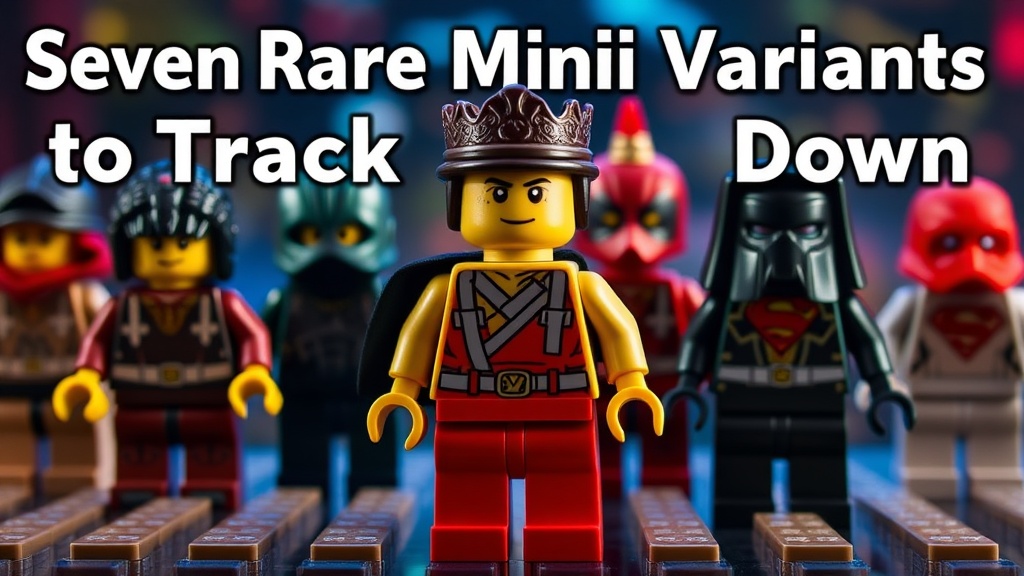
Seven Rare Minifigure Variants to Track Down

The Golden Star Wars Collection
Limited Edition Seasonal Figures
Exclusive Convention Exclusives
Misprinted and Error Figures
Rare Licensed Character Variants
Old School Classic Space Heroes
Promotional and Gift-With-Purchase Figures
Are you staring at a shelf of standard minifigures and wondering which ones will actually hold their value over the next decade? Finding rare variants isn't just about luck; it's about knowing exactly which production errors, limited runs, and specific mold changes drive prices into the stratosphere. This list identifies seven specific minifigure variants that collectors are currently hunting to round out their high-end collections.
Why Do Certain Minifigures Cost More Than Others?
Certain minifigures command higher prices due to limited production numbers, manufacturing errors, or their status as part of retired themes. Most of the time, it's a simple matter of supply and demand. If a figure was only included in a single, small promotional set or a specific polybag, the scarcity makes it a target for serious investors.
You'll often see a massive price gap between a standard version of a character and a "variant" version. Sometimes, this is intentional—like a different hairpiece or a unique accessory. Other times, it's a mistake. A slight color deviation in a printed torso can turn a $5 figure into a $500 treasure. It’s a bit of a gamble, but that's the fun of the hunt.
To keep your high-value pieces in top shape, you'll want to be mindful of how you display them. For example, if you're displaying these rare pieces near a window, check out my guide on protecting your bricks from sunlight and UV damage to prevent color fading.
The following table shows the typical price variance you might see between a common figure and a rare variant:
| Figure Type | Common Version Price | Rare Variant Price | Primary Driver |
|---|---|---|---|
| Star Wars Clone | $3 - $5 | $100+ | Specific Helmet Mold |
| Classic Space | $2 - $4 | $50+ | Vintage Print Quality |
| Super Heroes | $5 - $10 | $80+ | Limited Edition Promo |
1. The "Classic Spaceman" with Silver Printing
The original 1970s/80s Classic Space line is the bedrock of many collections, but the silver-printed versions are the real prizes. While the standard blue-themed astronauts are common, the versions featuring silver printing on the torso and legs are much harder to find in mint condition.
These figures are often found in older, vintage sets. Because the printing on these older pieces was less durable than modern standards, finding one without "play wear" is incredibly difficult. If you find one, don't just toss it in a bin—treat it like gold.
2. Star Wars: The "Gold" C-3PO
The Gold C-3PO from the early Star Wars lines is a legendary figure. Specifically, the version that appeared in certain early sets features a distinct metallic sheen that differs from the more matte or yellowish versions found in later, more common sets.
Collectors look for the specific luster of the gold plastic. If the figure looks "flat," it's likely a later, cheaper production. This is one of those items where the difference between a "good" and a "great" figure can be hundreds of dollars. It's a nuance that only seasoned collectors truly appreciate.
3. The "Bent" Chrome Minifigure Variants
Chrome-plated minifigures—often seen in Star Wars or specialized promotional sets—are notorious for a specific type of degradation. When we talk about "bent" or "chipped" chrome, we're talking about the physical breakdown of the thin metal layer over the plastic.
A pristine, unchipped chrome figure is a holy grail. The moment you see even a tiny bit of the underlying plastic through the plating, the value plummets. It’s a frustrating reality for many, but it makes the hunt for a "perfect" specimen much more intense. You can read more about the history of various LEGO products on Wikipedia to understand how these manufacturing-heavy pieces evolved.
4. The 1999 "Classic" Castle Knight (with specific Shield)
In the late 90s, the Castle theme saw several iterations of knights. However, the version with a specific, highly detailed shield print is a standout. Most modern knights have simplified, single-sided prints, but the vintage versions often had much more intricate, two-sided detailing.
This is a perfect example of why you shouldn't just look at the character, but at the accessories. A "Knight" is just a guy in armor, but a "Knight with a specific 1999-era shield" is a collector's item. Always check the accessory before you buy!
5. The "Double-Sided" Expression Variants
In the modern era, LEGO has used double-sided heads (one side smiling, one side frowning/surprised) to add variety to sets. However, certain early-run versions of these figures had slight facial printing errors or different eye-color shades.
These are often accidental, but they are highly sought after by specialists. For instance, a figure that was supposed to have a standard smile but has a slightly "off" expression due to a printing offset can be a centerpiece in a specialized collection. It's a niche, but it's where the real money is in the "error" market.
6. The "Black" version of Classic Colors
There is a long-standing tradition of releasing "Black" versions of iconic characters. Think of the black version of the classic LEGO Space minifigure or certain Star Wars characters. These are usually produced in much smaller quantities than the standard color versions.
These are often released as part of "gift with purchase" promotions or extremely limited polybag sets. Because they aren't part of the standard retail-shelf rotation, they are much harder to track down through traditional channels. If you see one at a garage sale, grab it. You'll likely regret it if you don't.
7. The "Chrome" R2-D2
R2-D2 has had many versions, but the chrome-plated R2-D2 is a standout. This figure is a high-end collector's piece due to the difficulty of the manufacturing process. The plating must be perfect to avoid the "chipping" issue mentioned earlier.
The value of this figure is tied directly to its physical integrity. A scratched or chipped chrome R2-D2 is significantly less valuable than a pristine one. It's a high-stakes item for any serious Star Wars enthusiast. If you're looking to display this, make sure you have a stable, vibration-free shelf. If you need help with your display setup, I've written a post on choosing the best storage solutions for your LEGO collections.
How Much Should You Budget for Rare Variants?
Budgeting for rare variants depends entirely on the specific figure and its current market demand. You might find a "common" version of a character for $5, while the rare variant sits at $150. There is no middle ground for many of these items.
A good rule of thumb is to check recent "Sold" listings on secondary markets rather than just looking at "Asking" prices. The asking price is what a seller hopes to get; the sold price is what people are actually paying. This is the most honest way to gauge the true value of a piece.
- Low-Tier Rarities: $20 - $50 (Commonly found in recent retired sets).
- Mid-Tier Rarities: $50 - $150 (Specific printing variations or limited promos).
- High-Tier Rarities: $200 - $1,000+ (Vintage errors or extremely low-production chrome/gold).
It's worth noting that the market for these items can be volatile. A sudden influx of a specific figure from a re-release can temporarily drive prices down, but the long-term value of truly rare, vintage pieces remains relatively stable. Always do your homework before committing a large amount of capital to a single figure.
The hunt for these pieces is part of the joy of collecting. Whether you're looking for a tiny printing error on a Star Wars clone or a gleaming gold C-3PO, the details are what make the hobby so deep. Keep your eyes peeled during your next trip to the local shop or your next online auction.