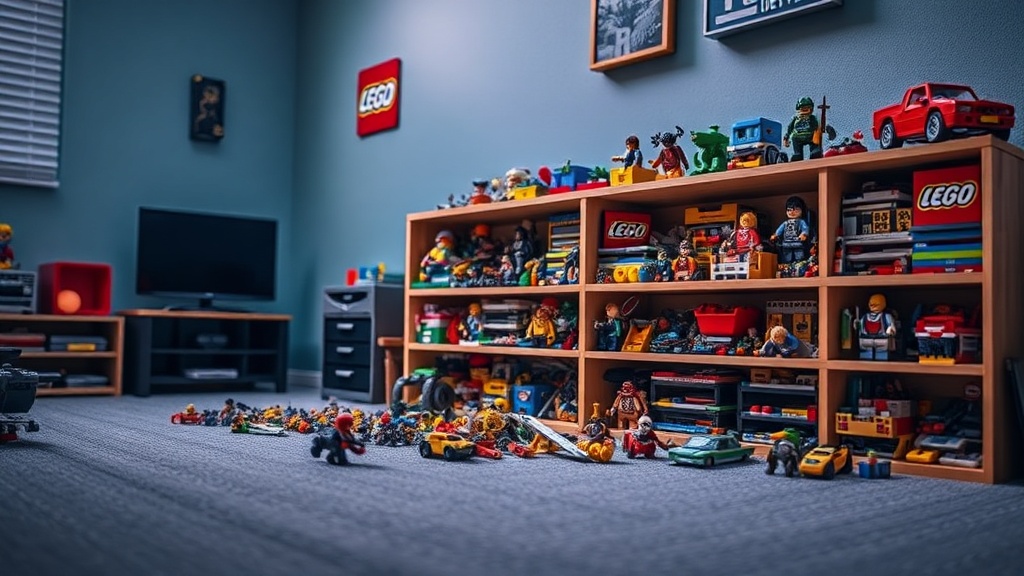
Choosing the Best Storage Solutions for Your LEGO Collections

Are you struggling to find space for your growing LEGO collection?
You've spent months hunting down that one specific set, and now it's sitting in a cardboard box in the corner of your office. It's a common problem. As your collection grows, the sheer volume of plastic—bricks, plates, and specialized pieces—starts to feel overwhelming. Whether you're dealing with loose parts from a massive build or trying to organize a massive bin of loose bricks, having a system in place matters. This guide focuses on practical, physical storage methods that keep your pieces organized, accessible, and, most importantly, safe from damage.
The goal here isn't just to hide the mess. It's about creating a workflow that makes building more enjoyable. When you're halfway through a build and realize you're missing a tiny 1x1 plate, you shouldn't have to dig through five different bins to find it. We're looking at various methods—from specialized drawers to heavy-duty bins—to help you decide what fits your specific type of collecting.
What are the best ways to organize loose LEGO bricks?
If you have a massive collection of loose pieces, you're likely dealing with hundreds or even thousands of individual elements. The method you choose depends on how much you actually build. If you're a builder who constantly works on custom MOCs (My Own Creations), you need accessibility. If you're more of a curator who keeps things in pristine condition, you'll want more protection.
One of the most popular methods is the use of small-compartment organizer boxes. These are the plastic trays with many small, removable bins. They are great for sorting by color or piece type. However, a word of caution: sorting by color can actually make finding pieces harder in the long run. Many veteran builders suggest sorting by part type instead. It's much easier to find a specific light bluish gray slope in a bin of different shapes than it is to find a specific shape in a bin of only one color. You can check out the various sorting standards used by professional builders on LEGO.com to better understand how parts are categorized.
For those with much larger volumes, industrial-style plastic bins or heavy-duty totes are the way to go. These are great for bulk pieces like bricks and plates, but they are terrible for small, specialized pieces like clips or tiny pins. If you use large bins, make sure they have a lid to prevent dust buildup—dust is a constant enemy for any collector.
Comparing Storage Methods
| Storage Type | Best For | Pros | Cons |
|---|---|---|---|
| Small Compartment Trays | Minifigures & Tiny Parts | Highly organized, easy to see | Takes up a lot of desk space |
| Large Plastic Totes | Bulk Bricks & Plates | High capacity, low cost | Difficult to find small parts |
| Stackable Drawers | Medium-sized Builds | Great for vertical space | Can be heavy when full |
Remember that gravity is a factor. If you're stacking high-capacity bins, make sure the bottom ones are sturdy. A stack of heavy bins that tips over can result in a catastrophic "brick explosion" that takes hours to clean up.
How do I prevent dust from ruining my builds?
Dust is the silent killer of displays. It settles into the crevices of your models and, if left too long, can become quite difficult to remove without damaging the surface. While you can't avoid it entirely, you can manage it. If you're displaying your builds on open shelves, you'll find yourself dusting frequently. This is where display cases or acrylic covers come into play. They aren't just for aesthetics; they act as a physical barrier against the environment.
When selecting a case, pay attention to the seal. A loose-fitting lid won't stop fine dust from drifting in. If you're building a large-scale display, you might want to consider a custom-fit acrylic cover. This keeps your hard work looking fresh and prevents the "weathered" look that comes with years of exposure. For more information on maintaining the integrity of your models, you can often find technical specifications via Brickset, which tracks many aspects of set history and care.
Does the type of container affect the value of my LEGO?
This is a big one for collectors who view their sets as investments. If you are a "New in Box" (NIB) collector, your storage is essentially your inventory management. Storing your sealed sets in a way that avoids pressure is vital. Do not stack heavy boxes on top of lighter ones. Even if the cardboard looks thick, the weight of a larger, heavier set can cause the bottom box to dent or even crack the plastic inside. This is known as "box crush" and it significantly impacts the resale value of a set.
For those who have opened their sets but want to preserve the value, consider using specialized bags. Small, clear, resealable plastic bags are perfect for keeping minifigures and small parts together. This prevents pieces from getting lost and keeps the "original" feel of the set intact. If you're storing loose parts, try to avoid using any containers that could cause scratching. Some collectors use soft-lined trays to ensure that high-gloss or specialized pieces don't get scuffed during transport or storage.
One thing to watch out for is the temperature. If you're storing your collection in an attic or a garage, you're risking the long-term health of the plastic. Extreme heat can cause parts to warp or even cause the colors to fade. It's always better to keep your most valuable pieces in a climate-controlled room. A stable environment is the best way to ensure your collection remains in the same condition as the day you bought it.
Ultimately, the way you store your collection depends on your personal goals. Are you building to build, or are you collecting to hold? If you're a builder, focus on accessibility and part-sorting. If you're a collector, focus on protection and structural integrity. Whatever you choose, get organized now—it's much easier to build a system when you only have one box to deal with rather than ten.