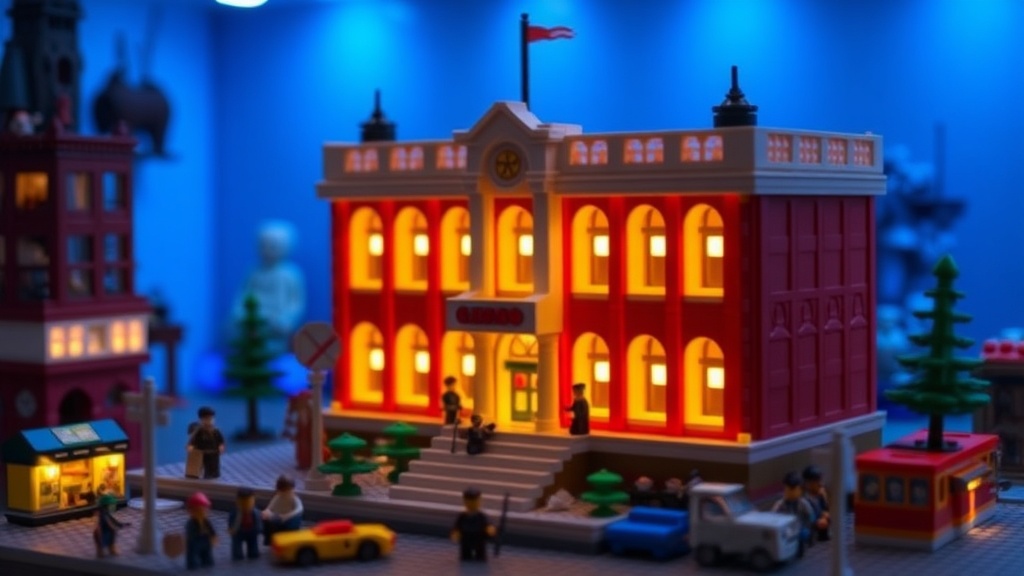
Why Lighting Is Actually Ruining Your LEGO Display

Most collectors assume that a little bit of light is fine, or that a bright spotlight makes their builds look better. They're wrong. If you've ever noticed your bright red bricks turning a dull, pale pink or your dark grey pieces looking chalky, you've already seen the damage. Light isn't just a way to show off your work; it's a slow-acting chemical reaction. We're talking about photo-degradation—the process where UV rays break down the chemical bonds in the ABS plastic that makes up your favorite sets. This isn't just a cosmetic issue; it's a structural one. If you don't control your light, you're essentially watching your collection fade away in real-time.
Does Sunlight Damage LEGO Bricks?
The short answer is yes, and it happens faster than you'd think. Sunlight contains high levels of UV radiation, which is the primary culprit behind the yellowing of white and light-colored bricks. You might think a window in your office or living room is harmless, but even indirect sunlight carries enough energy to alter the polymer chains in the plastic. This is why many collectors spend a fortune on specialized display cases, only to place them right next to a sunny window. It's a massive mistake.
When the plastic undergoes this change, it's not just the color that shifts. The material can become brittle. A set that was once sturdy and snap-ready can become fragile, making it difficult to disassemble or even move without snapping pieces. If you want to keep your collection in top-tier condition, you have to treat light as a variable you can control. It's not enough to just have a "bright room"; you need to manage the specific wavelengths hitting your builds.
Common Types of Light Damage
Understanding the difference between types of light helps you build a better defense strategy. There are three main things to watch out for:
- UV Radiation: The most aggressive form of damage. This causes the most rapid color shifts and structural brittleness.
- Infrared (Heat): Heat from high-wattage bulbs can actually warp smaller or thinner pieces. If your display case feels warm to the touch, your lights are too close.
- Visible Light Intensity: Even without UV, extremely bright light can cause "fading" over long periods, particularly in bright reds and yellows.
Can I Use LED Strips for Displaying My Sets?
LEDs are the gold standard for collectors, but they aren't a magic bullet. The reason we love LEDs is that they emit very little heat and, more importantly, almost no UV radiation. However, you can't just stick any strip into your display and call it a day. You still need to consider the placement and the quality of the light. If you're using cheap, unbranded LED strips, they might still emit some heat that can affect the air temperature inside a closed acrylic case.
When choosing lighting, look for "cool white" or specific color temperatures that don't produce heat. A good rule of thumb is to keep your light sources at least a few inches away from the actual bricks. If you're using an enclosed case, the heat can become trapped, creating a localized greenhouse effect. This is a common mistake that even seasoned collectors make. Check out the official LEGO site for advice on set care, but remember that their advice is often general. For serious collectors, you need to be more granular with your environmental control.
The Best Lighting Setup for Collectors
If you want your displays to look professional without sacrificing the longevity of the plastic, follow these guidelines:
- Avoid Natural Light: Use blackout curtains or UV-filtering window film if your display is in a room with windows.
- Use LED Strips: Stick to high-quality, low-wattage LEDs. They are much safer for the plastic than traditional incandescent or halogen bulbs.
- Monitor Temperature: If you use a display case, ensure there is some airflow. A sealed box with a high-intensity light inside is a recipe for warped pieces.
- Distance is Key: Keep your light sources far enough away that they don't heat the air around the bricks.
It's also worth noting that many high-end display cases are marketed as "UV protected," but that's often a marketing term. Most standard acrylic or glass won't block 100% of UV rays. If you're displaying a highly valuable, vintage set, you might want to look into museum-grade acrylic, which is much more effective at filtering out harmful wavelengths. You can find detailed technical specs on materials like this through various scientific databases if you want to get really technical about polymer degradation.
How Do I Prevent Yellowing in White Bricks?
Yellowing is the bane of a collector's existence. It's particularly common in older, vintage sets where the plastic has had decades to react to the environment. The most effective way to prevent it is to avoid the light entirely. If you can't avoid it, use UV-blocking films on your windows and use LED lighting that is specifically labeled as UV-free. It's a proactive approach rather than a reactive one. Once a brick has turned yellow, it's incredibly difficult to reverse without using harsh chemicals like hydrogen peroxide, which can sometimes leave a residue or affect the finish of the plastic.
I've seen many collectors try to "fix" yellowing with various home remedies, but I strongly advise against it. The chemical process of "retrobrighting" (using peroxide and UV light to whiten plastic) is actually a way of bleaching the surface. It's a temporary fix that can eventually lead to more brittleness. The best way to keep your collection looking fresh is to prevent the damage from happening in the first place. Control your environment, monitor your light sources, and always keep your builds out of direct sunlight. Your future self—and your collection's value—will thank you.