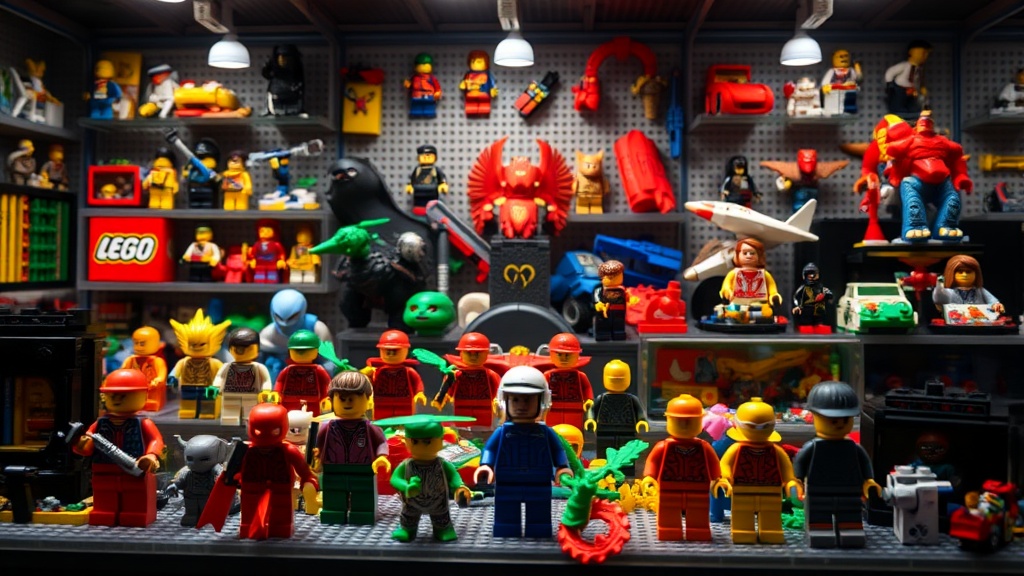
The Ultimate Guide to Displaying and Protecting Your Lego Collection

What's the Best Way to Display Lego Sets Without Damaging Them?
The best way to display Lego sets without damage involves keeping them away from direct sunlight, controlling humidity levels between 40-60%, using stable shelving rated for weight, and avoiding adhesives or modifications to bricks. Proper display techniques preserve both the structural integrity and resale value of collectible sets.
Displaying Lego collections is about balancing visibility with protection. Many collectors make the mistake of placing prized sets on windowsills or open shelves where dust, UV light, and temperature fluctuations wreak havoc. Bricks yellow. Stickers peel. Minifigures fade. The damage is often irreversible.
Start with location. North-facing rooms (in the Northern Hemisphere) receive the least direct sunlight. If that's not an option, UV-filtering window film—brands like 3M make excellent products—blocks up to 99% of harmful rays. It's cheaper than replacing a UCS Millennium Falcon with sun-bleared gray bricks.
Shelving matters more than most realize. The IKEA KALLAX unit handles most sets beautifully, but heavier builds—think the Titanic or Star Wars AT-AT—need reinforced support. Wall-mounted shelves should anchor into studs, not drywall. Nothing ruins a collection faster than 7,000 pieces hitting the floor at 2 AM.
Glass display cases offer the best protection. Detolf cases from IKEA run about $70 and fit most modular buildings. For larger sets, consider custom acrylic cases from companies like Wicked Brick or iDisplayit—pricier (often $100-300), but tailor-made with stud-compatible bases. Some collectors swear by baseball bat display cases for vehicle sets. Creative. Affordable. Effective.
How Do You Protect Lego Minifigures From Damage?
Minifigures require individual storage or display solutions that prevent scratches, fading, and torso cracks caused by prolonged standing or environmental exposure. Small actions—like rotating poses and avoiding tight accessories—extend their lifespan significantly.
Minifigures are oddly fragile. That tiny plastic rectangle has been through decades of design evolution, but the basic construction remains vulnerable. Prolonged standing causes "loose leg syndrome" and can stress the torso-leg connection. UV light fades printing—especially on rare figures like Mr. Gold or the 2012 Comic-Con exclusives.
Here are the most effective protection methods:
- Minifigure display cases — Shadow boxes with UV-protective acrylic front panels (shadowbox.com makes good ones)
- Individual plastic cases — Small clamshell cases or "minifigure coffins" prevent scratches during storage
- Rotating poses — Change leg positions every few months to prevent stress cracks
- Remove accessories — Hairpieces, helmets, and capes left on for years can cause discoloration or stress marks
- Climate control — Same 40-60% humidity rule applies; silica gel packets help in humid climates
Serious collectors invest in baseball card-style cases or custom minifigure stands. The official Lego Store occasionally releases display frames (the Minifigure Series frames were particularly popular), but third-party options from Minifigs.me or Display Geek offer more flexibility.
Worth noting: loose minifigures in bins scratch each other. That "clacking" sound when digging through a tub? Tiny abrasions on torsos and legs. For valuable figures—original Star Wars characters, vintage Castle knights, anything pre-2000—individual bagging or compartmentalized storage isn't paranoid. It's necessary.
What Storage Solutions Work Best for Large Lego Collections?
Large collections benefit from hybrid storage systems combining sorted brick storage (by color, type, or both), sealed bins for bulk, and dedicated spaces for built sets. The best approach depends on whether you prioritize rebuilding, display, or investment preservation.
Most collectors evolve through stages. First, everything mixes together. Then frustration hits—finding that one specific piece in a sea of bricks. Eventually, a system emerges. The key is choosing a system you'll actually maintain.
| Storage Type | Best For | Top Product Options | Price Range |
|---|---|---|---|
| Stackable drawers | Sorted bricks by color/type | IRIS USA 44-Quart Weathertight, Akro-Mils 10164 | $25-60 |
| Small parts organizers | Technic pins, tiles, minifigure accessories | Stanley Small Parts Organizer, Harbor Freight Apache cases | $15-40 |
| Large bins | Bulk storage, unsorted collections | Sterilite 116-Quart Ultra, Rubbermaid Roughneck | $20-35 |
| Ziplock bags | Set preservation, instruction manuals | 2-gallon and gallon freezer bags | $10-15 per box |
| Under-bed storage | Flat sets, baseplates, instructions | IRIS Under Bed Storage, Home Depot Husky bins | $30-50 |
The Akro-Mils 10164 cabinet—with 64 small drawers—has become something of a legend in Lego communities. Each drawer holds a specific piece type. Cross braces in one. 1x2 plates in another. The system scales. Add cabinets as the collection grows. The downside? It's not portable. And you'll spend a weekend labeling everything.
Here's the thing about sorting: there's no universal "right" way. Some builders sort by color (easier visually). Others by piece type (easier functionally). Element collectors—those hunting every variation of every brick—need specialized systems tracking part numbers, mold variations, and color codes. That's a different rabbit hole entirely.
For built sets in storage (the ones not on display), disassemble partially or fully depending on space. Ziplock freezer bags prevent scratches. Original boxes, if kept flat, slide under beds or stack in closets. Keep instructions flat or in page protectors—folded manuals develop permanent creases that hurt resale value.
Climate and Environmental Considerations
Lego bricks are ABS plastic—stable, durable, but not indestructible. Extreme heat warps pieces. Think attics in summer or storage units without climate control. Cold makes plastic brittle. Attic temperatures reaching 140°F have been documented melting connection points on older bricks.
Humidity creates problems too. Mold grows on dust-covered sets in damp basements. Adhesive stickers loosen. Paper instructions warp. If storing in basements, use dehumidifiers. DampRid containers help in closets. Check stored sets annually—passive monitoring catches problems early.
Pets and children (other people's, obviously—yours are perfectly behaved) present unique hazards. Cats knock minifigures off shelves. Dogs chew bricks—yes, the vet bills are real. Display cases with doors or improved positioning solve most issues. The IKEA FABRIKÖR glass cabinet has a lock. Worth the extra cost if small humans visit regularly.
Insurance and Documentation for Serious Collectors
Collections exceeding $10,000 in value need documentation for insurance purposes. Photograph everything. Maintain spreadsheets with set numbers, purchase dates, and current values (BrickLink's price guide tracks this). High-value sets—modular buildings, UCS Star Wars, Ideas sets long retired—appreciate significantly. A Cafe Corner bought for $140 in 2007 now sells for over $3,000 used.
Standard homeowner's insurance often caps collectibles coverage. Riders or specialty collectibles insurance (companies like CollectInsure specialize in this) provide better protection. Keep receipts. Take photos. Update valuations annually. The 30 minutes of paperwork saves thousands if disaster strikes.
Building techniques also affect longevity. Illegal connections—stressed bricks, partially inserted pieces, non-Lego elements forcing strain—damage pieces over time. The Brick Architect blog maintains an excellent guide to legal vs. illegal techniques. Follow it. Your bricks will thank you.
At the end of the day, Lego collecting is about joy—the build, the display, the community. Protecting that investment (emotional and financial) doesn't require obsession. Just common sense, a few good products, and the discipline to dust occasionally. The collection will outlast the collector. Build accordingly.