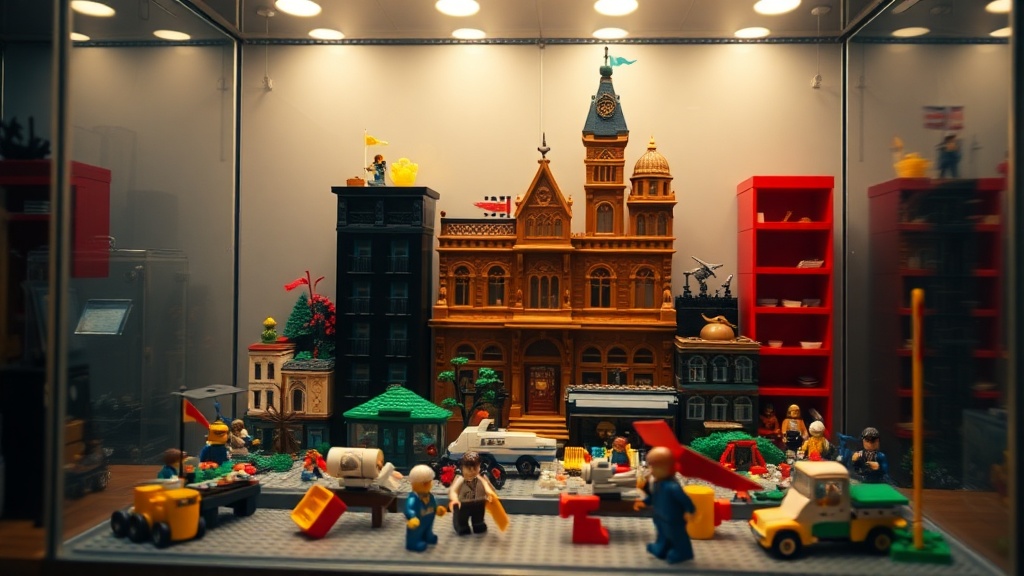
Setting Up Your LEGO Display Cases for Long-Term Preservation

How do I prevent dust and light damage on my LEGO sets?
Are you worried about that pristine Star Wars UCS set losing its luster because of a layer of grime or fading plastic? When you spend significant time and money on high-end builds, the goal isn't just to finish the set—it's to keep it looking exactly the way it did the moment you snapped that last piece into place. This guide covers the physical requirements for building a display-ready environment that keeps your collection safe from common household enemies like dust, humidity, and UV rays.
The biggest threat to a plastic collection isn't actually time; it's the environment. Dust is a persistent nuisance that can settle into the crevices of complex builds (like the intricate parts of a Technic crane or a detailed Star Wars ship), making it nearly impossible to clean without risking damage to the parts. Meanwhile, UV light is the silent killer of color. If you've ever seen a bright red brick turn a dull, pale pink, you've seen light damage in action. We'll look at how to build a barrier against these factors.
Which display cases work best for LEGO sets?
Not all cases are created equal. You have three main paths when deciding how to house your builds: open shelving, acrylic boxes, or custom-built glass cabinets. For most collectors, a dedicated acrylic case is the gold standard. These cases offer a clear view from multiple angles while creating a physical seal that prevents dust from settling on the studs.
If you're working with much larger builds, like the Titanic or a large modular building, you might need to look at custom-sized acrylic covers. Standard display cases often leave too much dead space, which can lead to issues with air circulation or even localized heat buildup if the case is near a window. Always check the dimensions of your build—including any protruding parts—before you buy a case. There's nothing more frustrating than buying a beautiful box only to realize your build's wingtip hits the side wall.
For those who want a more professional look, consider a glass-fronted cabinet. These are great for larger collections but require a bit more maintenance. You'll want to ensure the cabinet is level and that the glass is high-quality. If you're serious about preservation, look for cases that offer UV-resistant properties. While no plastic is entirely immune to aging, a well-sealed case does a lot of the heavy lifting for you.
How can I keep my LEGO models dust-free?
The most effective way to keep your models clean is to prevent the dust from reaching them in the first place. A sealed environment is your best friend. However, even with a case, some dust might sneak in during maintenance or when you're moving things around. When you do need to clean your pieces, avoid using harsh chemicals. A soft-bristled brush—think a clean makeup brush or a specialized detailing brush—is often enough to sweep away surface dust without scratching the plastic.
Avoid using compressed air canisters if you can help it. While they seem helpful, the high pressure can occasionally blow small pieces loose or force dust deeper into the build's internal structure. Instead, use a handheld air blower (the kind used for camera lenses) to gently puff away debris. If you have a very intricate build, a small, soft-bristled paintbrush is the safest tool for the job. Always work with a gentle touch; you want to be thorough, but you don't want to apply enough force to snap a connection or dislodge a piece.
Is it safe to display LEGO near a window?
The short answer is no. Sunlight is a major enemy of plastic stability. Even if your display case is high-quality, direct sunlight can cause the internal structure of the bricks to weaken over time and will definitely lead to color fading. If your display area is near a window, you'll need to add a layer of protection. This might mean using UV-filtering window film or heavy curtains to control the light levels throughout the day.
If you can't move the display, look for cases that specifically mention UV protection or high-grade acrylic. Materials like those found in museum-grade displays are designed to block much of the harmful spectrum. You can research more about how UV light affects different materials at the National Park Service's resource on UV radiation to understand the science behind why light is so damaging. Even a small amount of daily exposure can add up over several years, leading to brittle parts or dull surfaces.
Keep an eye on your environment's temperature as well. Drastic changes in temperature can cause the plastic to expand and contract, which might lead to loose connections in your builds. A stable, climate-controlled room is the best place for any serious collection. If you're storing sets in a basement or an attic, be wary of high humidity, which can affect the packaging (if you're a box collector) and potentially lead to mold issues on any paper components within the set.
When you are setting up your display, think about the "look" as much as the "protection." A well-organized, dust-free collection looks professional and stays much more valuable. Whether you're using a specialized display shelf or a full-sized furniture piece, the goal is to create a controlled micro-environment for your pieces. This ensures that your hard work remains as impressive in ten years as it is today.